National Climate Stack Innovation Challenge
From Climate Data To Decision-Ready Intelligence For Indian Agriculture
NABARD is advancing a National Climate Stack for India — an interoperable climate intelligence architecture anchored in its DiCRA platform.
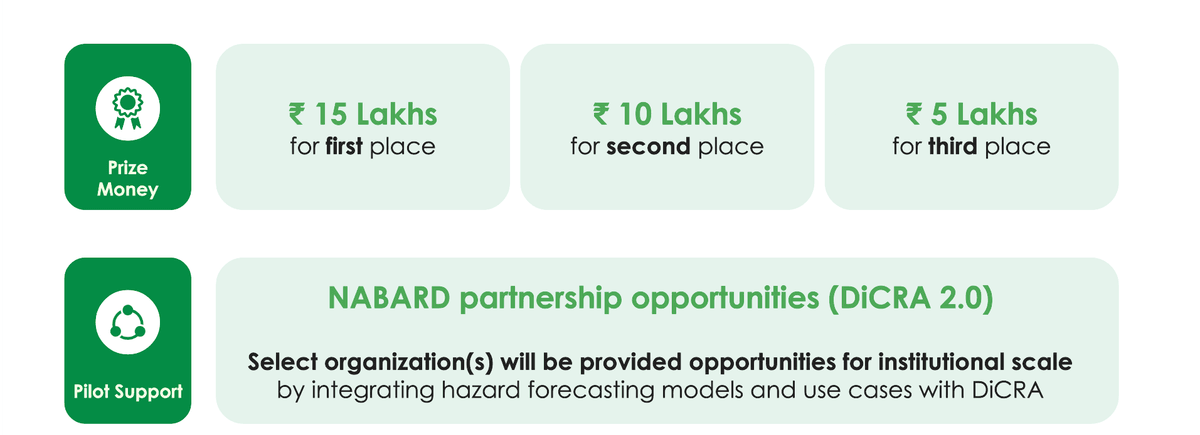
PRIZE MONEY:
Awards of ₹15 lakh, ₹10 lakh and ₹5 lakh
will be offered to the top three entries funded by NABARD
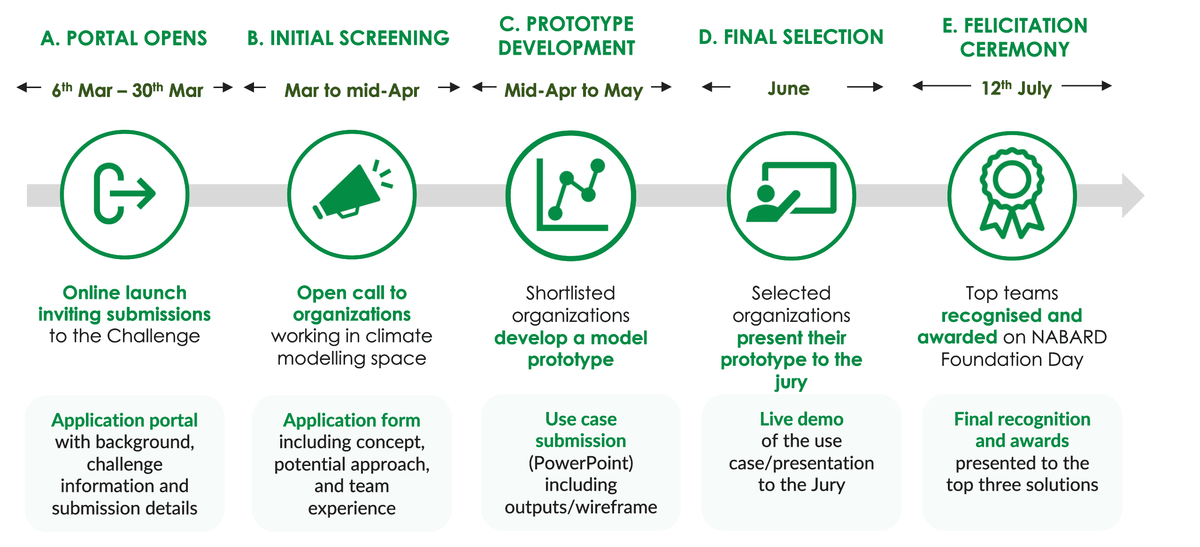
APPLICATIONS WINDOW:
6th to 30th March 2026

BUILDING CLIMATE RESILIENCE FOR AGRICULTURE
About the Challenge
The National Climate Stack Innovation Challenge is a national initiative led by the National Bank for Agriculture and Rural Development (NABARD), The Gates Foundation, and Dalberg Advisors. The Challenge seeks to address a fundamental structural gap in India’s climate resilience ecosystem: the absence of an integrated, interoperable climate data architecture capable of supporting credible near-term (10–15 year) hazard projections for rural India.
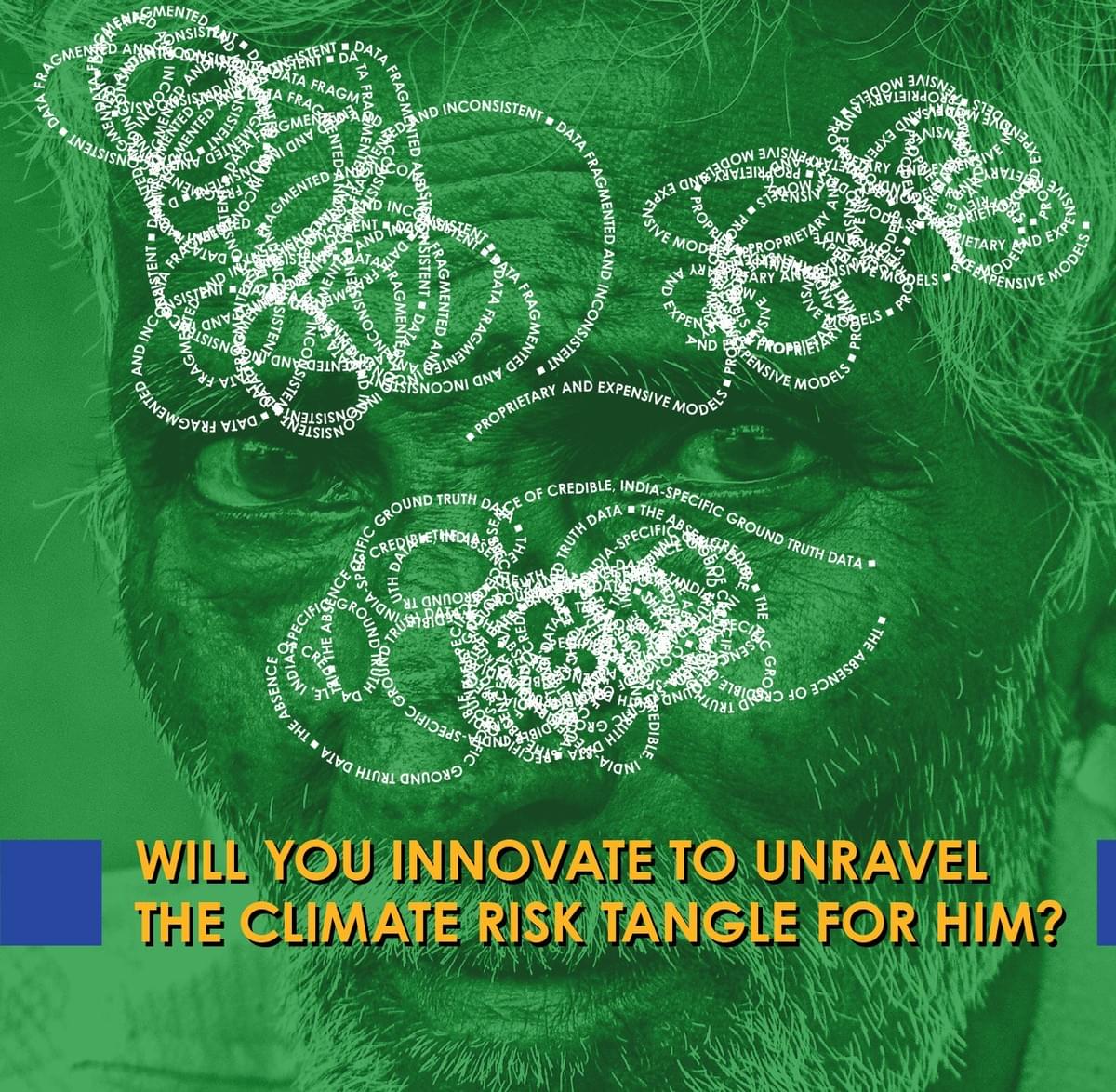
As climate risks become more frequent, intense, and unpredictable, India’s agricultural and rural systems face growing exposure. Yet current disaster response and financial mechanisms remain largely reactive, while climate data remains fragmented across institutions, siloed in proprietary models, and limited by gaps in ground-truth validation. Without granular and decision-ready climate foresight, farmers, banks, and policymakers are left planning under uncertainty.
The Innovation Challenge aims to catalyse the design of a Climate Stack for rural India — a comprehensive framework that integrates diverse climate data streams through interoperable APIs, layered modelling capabilities, and user-ready dashboards. Anchored in NABARD’s DiCRA platform, the envisioned Climate Stack would evolve into a digital public infrastructure enabling credible, localised hazard modelling and open, actionable intelligence for agriculture, rural finance, and public planning.
Through a structured collaborative sprint, the Challenge invites researchers, startups, academic institutions, and private-sector innovators to propose viable implementation frameworks for this Climate Stack. Selected participants will receive expert validation, mentorship, and grant support to develop comprehensive, scalable solutions that strengthen climate resilience across India’s rural economy.
Prize Money and Scaling Support
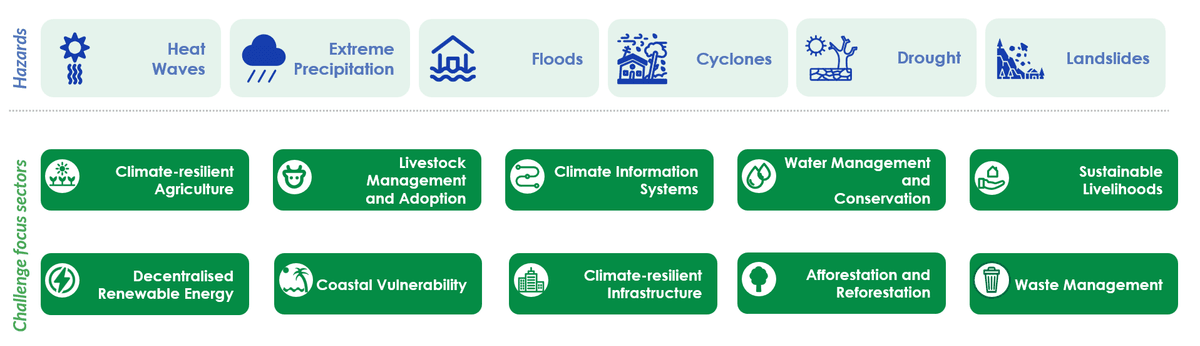
Key Themes
Who Can Apply
Teams of 3–5 members may represent a single organisation, a consortium of organisations within the same category, or a cross-category consortium spanning two or more categories.
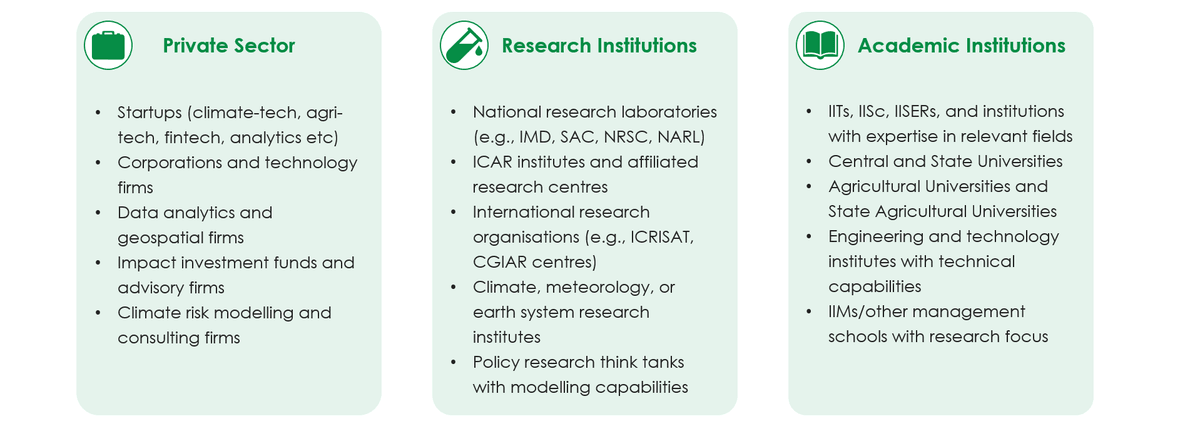
Teams must be affiliated with an organisation withinthe following categories to enable effective long-term scaling and
implementation in partnership with NABARD.Timelines
Ecosystem Outreach Partners